Local Home Builders Near Me: Top 2026 Experts!
Why Finding the Right Local Home Builder Matters for Your Investment
Local home builders near me can be found through several trusted channels:
- Industry Associations – Check the Canadian Home Builders’ Association member directory or Better Business Bureau listings for accredited builders with verified ratings.
- Design-Build Firms – Look for firms that offer integrated architecture, design, and construction services under one roof.
- Specialized Contractors – Seek builders with expertise in your specific project type (custom homes, major renovations, ADUs, or additions).
- Local References – Ask for portfolios, client testimonials, and examples of completed projects in your area.
The search for a qualified home builder feels overwhelming because it is overwhelming. You’re not just hiring someone to hammer nails—you’re choosing a partner who will steer complex zoning requirements, manage a budget that might stretch into seven figures, and bring your vision to life while protecting your investment. Choosing a local partner ensures personalized service and custom craftsmanship that national firms simply cannot match.
The stakes are high. As one client noted when building a custom home while living out of province, “We knew our decision was extremely important” because they had “interviewed multiple very reputable builders” and understood the potential pitfalls in new construction.
Unlike mass-market builders who prioritize speed and volume, top local builders specialize in complex, high-value projects where quality cannot be compromised. They understand regional building codes, have established relationships with local inspectors, and know how to work within your neighborhood’s specific requirements.
The difference between a good builder and the right builder often comes down to three factors: specialized expertise in your project type, transparent processes that eliminate surprises, and a design-build approach that integrates architecture and construction from day one.
I’m Charles Ruppert, and through my work with construction companies and home service providers, I’ve seen how critical it is to find local home builders near me who combine technical excellence with clear communication. The builders who succeed long-term are those who treat every project—whether a $50,000 renovation or a $3M custom build—as a reputation-defining opportunity.
Why Choose Local Home Builders Near Me?
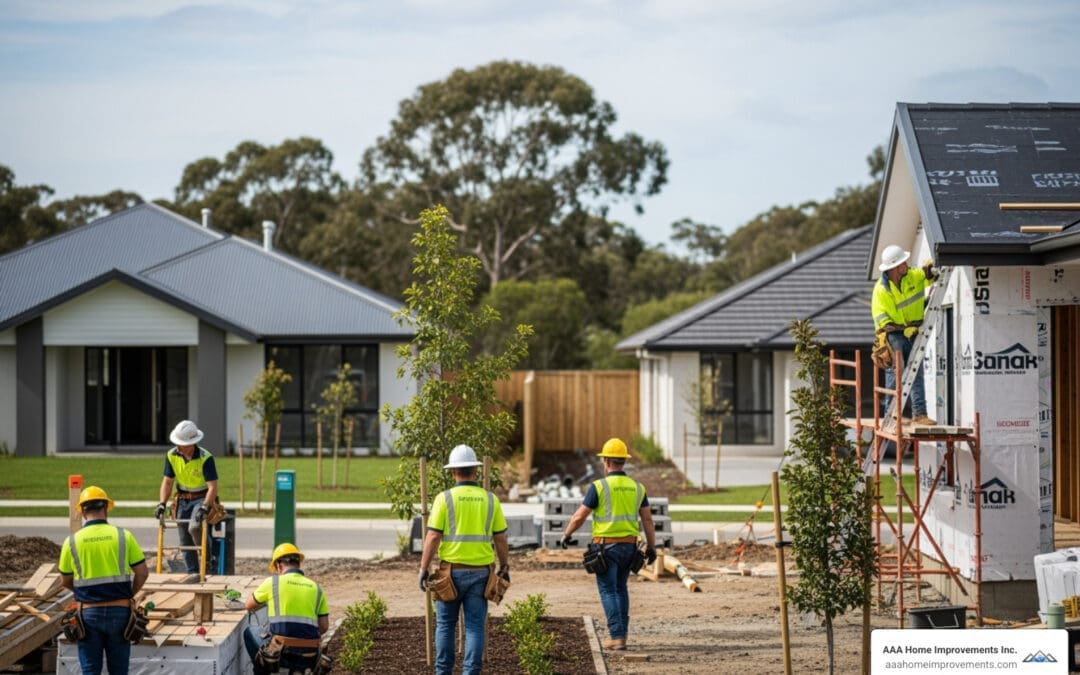
When you start a major home project – whether it is a ground-up custom build, a pop-top, or a whole-home renovation – the builder you choose will shape your timeline, your budget, and the quality you live with for decades. That is why many homeowners begin their search with local home builders near me: proximity is not just convenient, it is strategic. In complex, permit-heavy markets like Denver and the surrounding Front Range communities, local experience can be the difference between a smooth project and months of expensive delays.
For over 20 years, we at AAA Home Improvements have seen that “local” means more than a Denver address on a website. It means knowing how different jurisdictions interpret the same code language, understanding neighborhood design expectations, and having real working relationships with the people involved in approvals and inspections. To verify that a builder is active in the industry, you can also Find a Member of the Home Builders Association and confirm professional standing.
Local builders also tend to have tighter feedback loops. They can meet on site quickly, respond faster when issues surface, and coordinate trades who are already accustomed to building in the area. That responsiveness matters during preconstruction (budgeting and feasibility), during construction (field decisions and inspections), and after completion (warranty and follow-up). And because high-end residential work often involves many moving parts – architects, engineers, interior designers, specialty trades, and municipal reviewers – a builder with local systems and local relationships can keep the project organized and predictable.
Finally, there is an investment angle. In Denver Metro, home values can be materially impacted by exterior design compatibility, energy performance, and the quality of structural work that is not visible in listing photos. A local builder who understands what buyers and appraisers respond to in specific neighborhoods can help you make choices that protect resale value without compromising the home you want to live in.
Custom Architectural Styles
One of the most meaningful advantages of working with local home builders is the ability to create genuinely custom architecture that fits both your lifestyle and your neighborhood. Large national firms frequently rely on standardized plans and limited finish packages. By contrast, local builders are often better positioned to tailor floor plans and exterior design to regional expectations and site realities.
In Denver and throughout the Front Range, we commonly see a mix of contemporary homes, updated mid-century styles, traditional designs, and mountain-influenced details. A local design-build partner can help you translate inspiration photos into a plan that functions in real life: room sizes that feel right, traffic flow that supports daily routines, and elevations that balance curb appeal with practical construction. This is especially important in established neighborhoods where design review expectations, rooflines, and massing can affect approvals.
Local builders can also guide smarter material selection. Colorado’s sun exposure, freeze-thaw cycles, hail risk, and shifting seasonal moisture levels place real demands on exterior assemblies and roofing details. Choosing the right siding, flashing strategy, window packages, and insulation approach is not just aesthetic – it impacts long-term durability, comfort, and operating costs. A builder who is used to building here can recommend materials and details that perform well in the local climate while still delivering the look you want.
Understanding Local Regulations
Navigating regulations is one of the most valuable reasons to hire a local builder, particularly for major remodels and custom construction. Every city and county across the Metro area – Denver, Lakewood, Arvada, Parker, Highlands Ranch, and more – has its own permitting workflows, review timelines, zoning constraints, and documentation standards. Even when two municipalities adopt similar building codes, they often enforce them differently in practice.
A seasoned local builder helps reduce risk by identifying constraints early. That includes setbacks, lot coverage, height limits, parking requirements, wildfire or flood considerations where applicable, and structural engineering needs. When the regulatory realities are understood upfront, the design can be shaped to fit the site instead of being redesigned late in the process after plan review.
Just as important is coordination. Major projects typically require a tight sequence of steps: design development, engineering, energy documentation, permit submittals, revisions, inspections, and closeout. Local builders who operate in these jurisdictions regularly understand what reviewers tend to flag, how to package documents correctly, and how to plan schedules that account for real-world review times. The result is a smoother path from concept to construction – and fewer surprises once work begins.
For homeowners, that support translates into confidence. You should not have to become an expert in zoning and permitting to pursue a complex project. The right local builder can guide you through the process with clarity, keep momentum through long lead-time phases, and help ensure your project is compliant from day one.
Key Factors to Evaluate When Searching for Home Builders Near You
Choosing the right partner for your home build or major renovation is a decision that impacts your finances, your daily life, and the long-term performance of your property. When searching for local home builders near me, it helps to evaluate builders with the same discipline you would apply to any other high-stakes investment: verify experience, confirm process, and look for evidence of consistent execution.
A builder can have great photos online and still be the wrong fit for your project. The goal is to find a team that has completed comparable work, communicates clearly, and has a process built for the scale and complexity of what you are planning. This is especially true for large remodels and custom builds in Denver Metro, where site constraints and permitting requirements can drive cost and schedule if they are not managed correctly.
Below is a high-level comparison to help you understand why a custom, design-build general contractor is often a better fit for complex work than a high-volume spec builder.
| Feature | Custom Builders (AAA Home Improvements) | High-Volume Spec Builders |
|---|---|---|
| Design Flexibility | Fully custom; custom to lifestyle and site. | Limited to pre-set floor plans and finishes. |
| Quality Control | High-touch; specialized trades for complex builds. | Speed-oriented; standardized construction. |
| Project Scope | Major renovations, additions, and custom homes. | Primarily new developments and subdivisions. |
| Sustainability | High-performance materials and green building. | Standard code compliance. |
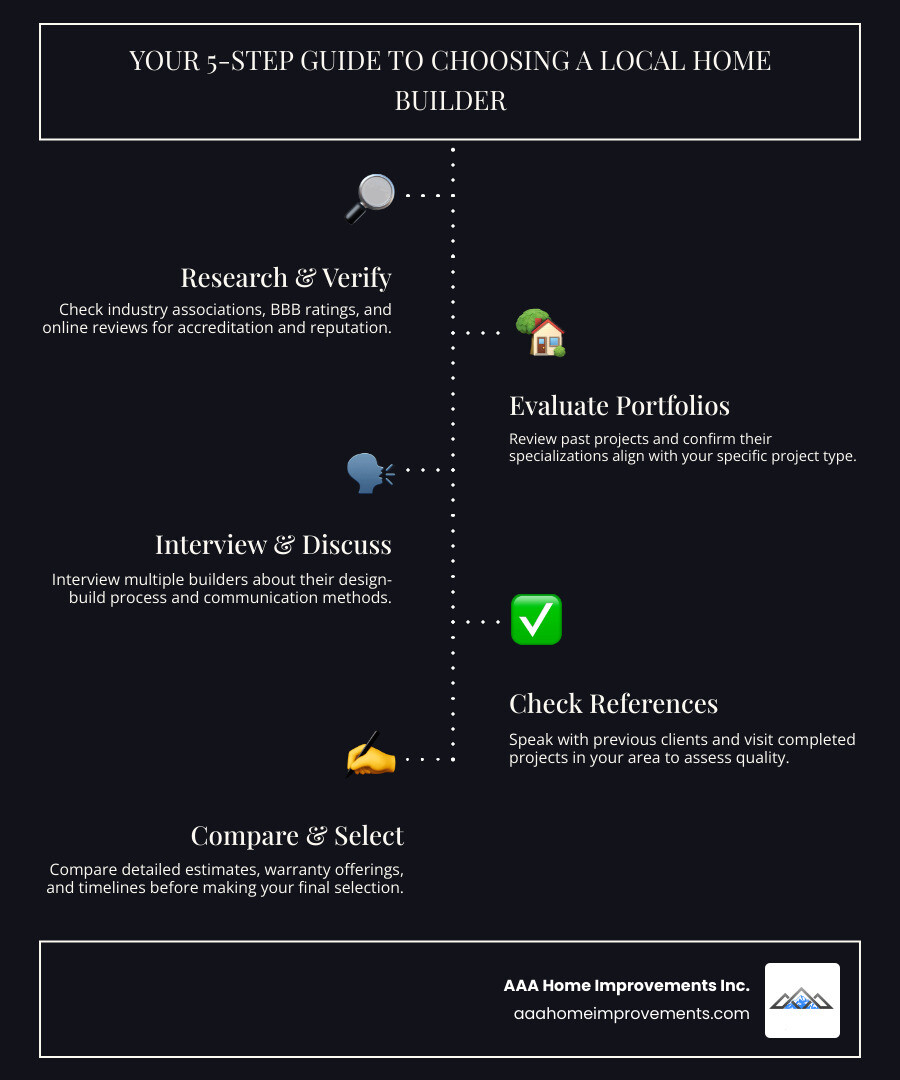
Before signing a contract, check local builder ratings and accreditation to confirm there are no obvious red flags and to understand how the company handles customer issues. Ratings are not the whole story, but they are one useful data point alongside references, portfolio quality, and the professionalism of a builder’s estimating and contract documents.
In addition to ratings, we recommend a disciplined portfolio review. Ask to see projects that match your scope (for example: structural reconfigurations, second-story additions, or ground-up custom builds) and not only the most photogenic spaces. The details that matter in high-end construction are often the least visible: how transitions are handled, how exterior assemblies are built, and how the builder manages complex scopes without letting quality drift.
It is also worth evaluating how a builder approaches preconstruction. For large-scale work, accurate budgeting and feasibility analysis up front can prevent costly redesign and change orders later. A builder who can clearly explain their process for estimating, scheduling, and scope definition is generally better equipped to manage a long project with fewer surprises.
Experience and Reputation of Local Home Builders Near Me
A builder’s reputation is earned over time and reinforced by repeatable results. In the Denver Metro area, where many projects require significant coordination between city reviewers, inspectors, engineers, and specialty trades, experience is not just about years in business – it is about proven capability in the local construction environment.
At AAA Home Improvements, our 20+ years of experience in Colorado’s residential construction landscape informs how we approach each project, from initial feasibility through final walkthrough. Our professional home remodeling work focuses on substantial improvements that require careful planning, technical oversight, and consistent quality control.
When evaluating any builder, ask for:
- Recent references for projects similar in size and type.
- Evidence of an organized quality control process (inspection milestones, documented punch lists, and clear closeout procedures).
- Clarity on warranty coverage and how service requests are handled after completion.
Also pay attention to communication. A highly technical builder who does not communicate well can create stress and uncertainty throughout a long project. The best local builders combine strong field execution with predictable updates, clear decision points, and transparent documentation.
Specializations and Project Scope
Not all builders are set up for complex residential construction. Some companies excel at cosmetic updates or quick-turn renovations; others are optimized for production building in subdivisions. If your project involves structural changes, major additions, or ground-up custom work, you need a builder whose core business matches that scope.
For example, homeowners pursuing income potential, multigenerational living, or property value growth may consider Accessory Dwelling Units (ADUs). ADUs often involve zoning constraints, utility coordination, and careful design to maximize function in a limited footprint. Similarly, complex home additions like pop-tops and second-story builds require deep structural knowledge, sequencing expertise, and a plan for keeping the project stable and weather-protected during construction.
When interviewing builders, ask direct questions about specialization:
- How many projects like mine have you completed in the last 3 to 5 years?
- What are the most common permitting or zoning obstacles you see in my municipality?
- How do you handle design changes and cost updates during preconstruction and construction?
Specialized expertise is one of the best defenses against the technical challenges of custom construction. It also supports better decision-making on materials, building performance, and long-term durability – all of which matter when your project budget is measured in six or seven figures.