
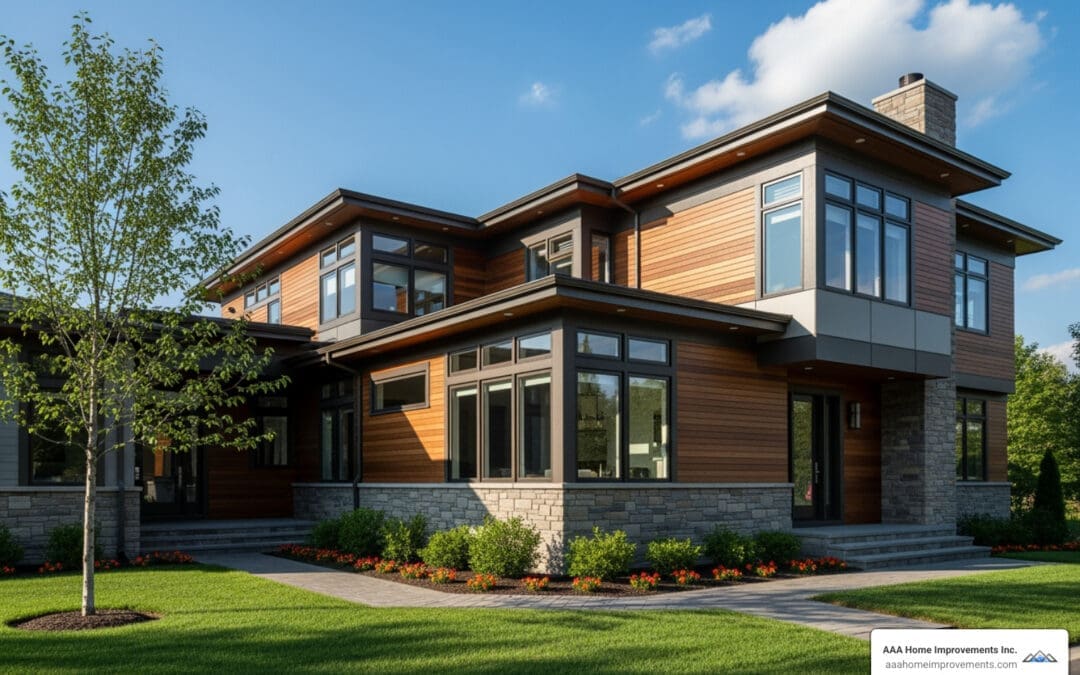
2nd Story Home Additions: Smart 83% ROI
Why Homeowners Choose to Build Up Instead of Out
2nd story home additions are one of the most effective ways to expand your living space without sacrificing yard area or violating setback restrictions. Here’s what you need to know:
- Space: Add 500-2,000+ square feet while keeping your existing footprint
- Cost: Typically $300-$500 per square foot
- Timeline: 6-12 months for a full addition, 3-6 months for a partial build
- Value: Expect approximately 65-83% ROI at resale
- Requirements: Foundation assessment, structural reinforcement, and building permits
Many Denver homeowners face a dilemma: they’ve outgrown their home but love their neighborhood. In today’s competitive market, moving often means bidding hundreds of thousands over asking price. Building up lets you stay put while gaining the space you need.
Vertical expansion preserves your yard, avoids property line issues, and can provide scenic mountain or city views. However, adding a second story requires careful structural planning. Your existing home must support the additional weight, which often involves reinforcing the foundation and upgrading load-bearing walls.
I’m Charles Ruppert, and I help homeowners steer the complex process of 2nd story home additions through strategic planning. My work focuses on connecting clients with experts like AAA Home Improvements for major residential projects.
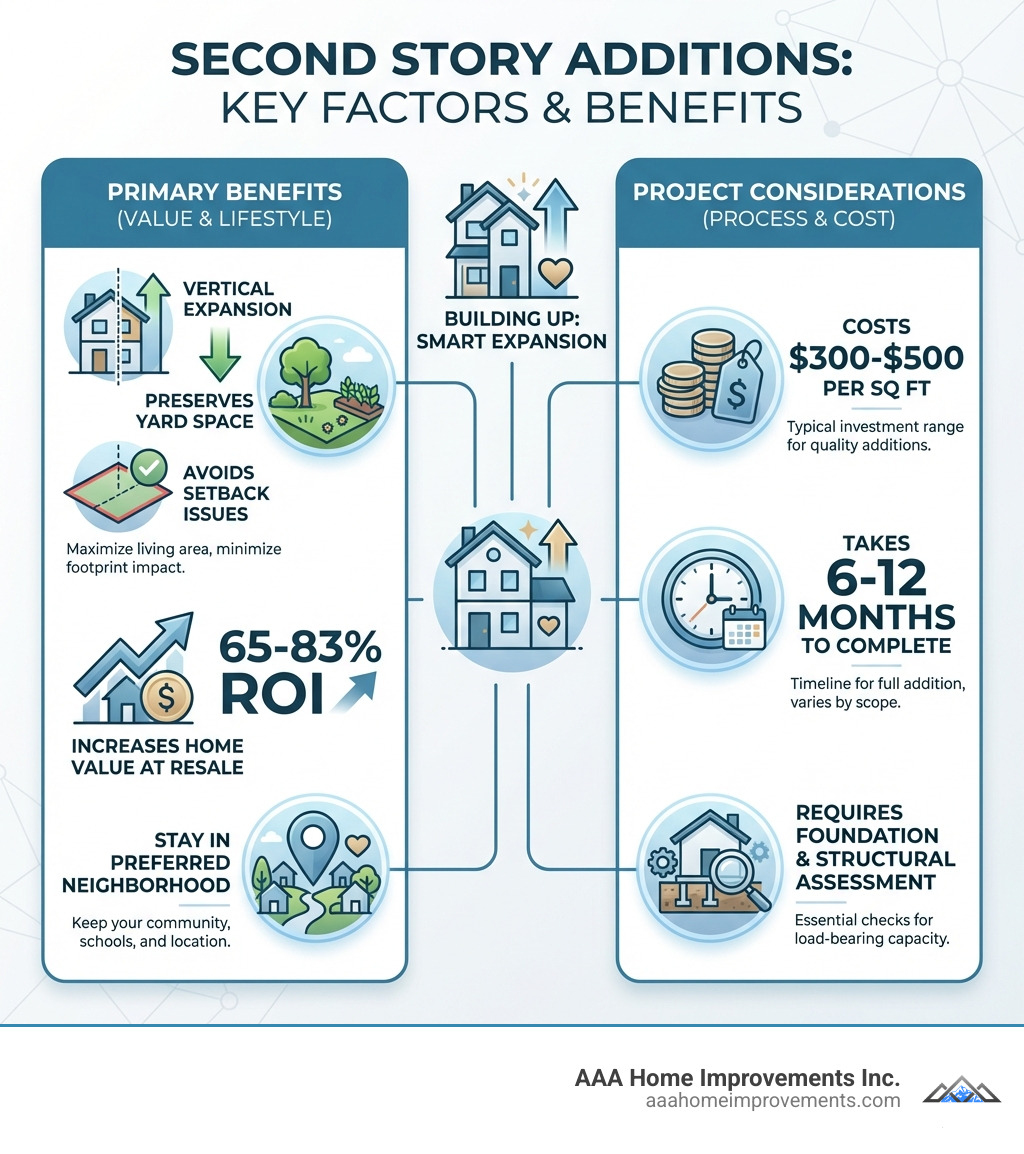
Primary Benefits of 2nd Story Home Additions
When space is at a premium, building up offers a compelling solution for Denver homeowners. The advantages of 2nd story home additions extend beyond extra rooms to lifestyle and financial benefits.
One immediate benefit is yard preservation. In Denver, where lot sizes are often restrictive, expanding horizontally means sacrificing gardens or patios. By building upwards, you keep your outdoor space intact while significantly increasing indoor square footage.
Adding a second story also opens up scenic views. A new master suite could offer panoramic vistas of the Rocky Mountains or city lights. Furthermore, building up can improve energy efficiency; upper levels are often easier to keep warm than ground-level extensions. With modern insulation, your new floor can be a highly comfortable space.
Financially, the ROI for 2nd story home additions is substantial, often increasing home value by 65% to 83%. It’s a strategic way to maximize property potential without the expense of moving. For more details, explore our More info about home addition benefits.
Types of Vertical Expansions
- Full Addition: Removing the entire roof to build a complete new level. This doubles usable space and offers maximum design flexibility. Costs typically start around $465,000.
- Partial Addition: Adding a story over a specific section, like a garage or wing. This is less disruptive and costs between $290,000 and $465,000.
- Dormer Additions: Extending sections of the roof vertically to create usable space in attics. These range from $90,000 to $230,000.
- Modular vs. Custom: Modular additions use pre-fabricated sections for speed, while custom builds offer custom design and seamless integration.
- Attic Conversions: Changing existing attic space into livable area. This requires structural reinforcement as attics aren’t typically designed for bedroom weight loads.
Staying in the Neighborhood You Love
In a market with low inventory, finding a new home is difficult. 2nd story home additions allow you to stay where your children are in school and your community ties are strong. You avoid the stress of house hunting and moving costs while creating the dream home you need at your current address.
Structural Requirements and Engineering Challenges
Adding a second story fundamentally alters your home’s structure. Our priority is ensuring the existing home can safely support the new weight through a thorough evaluation.
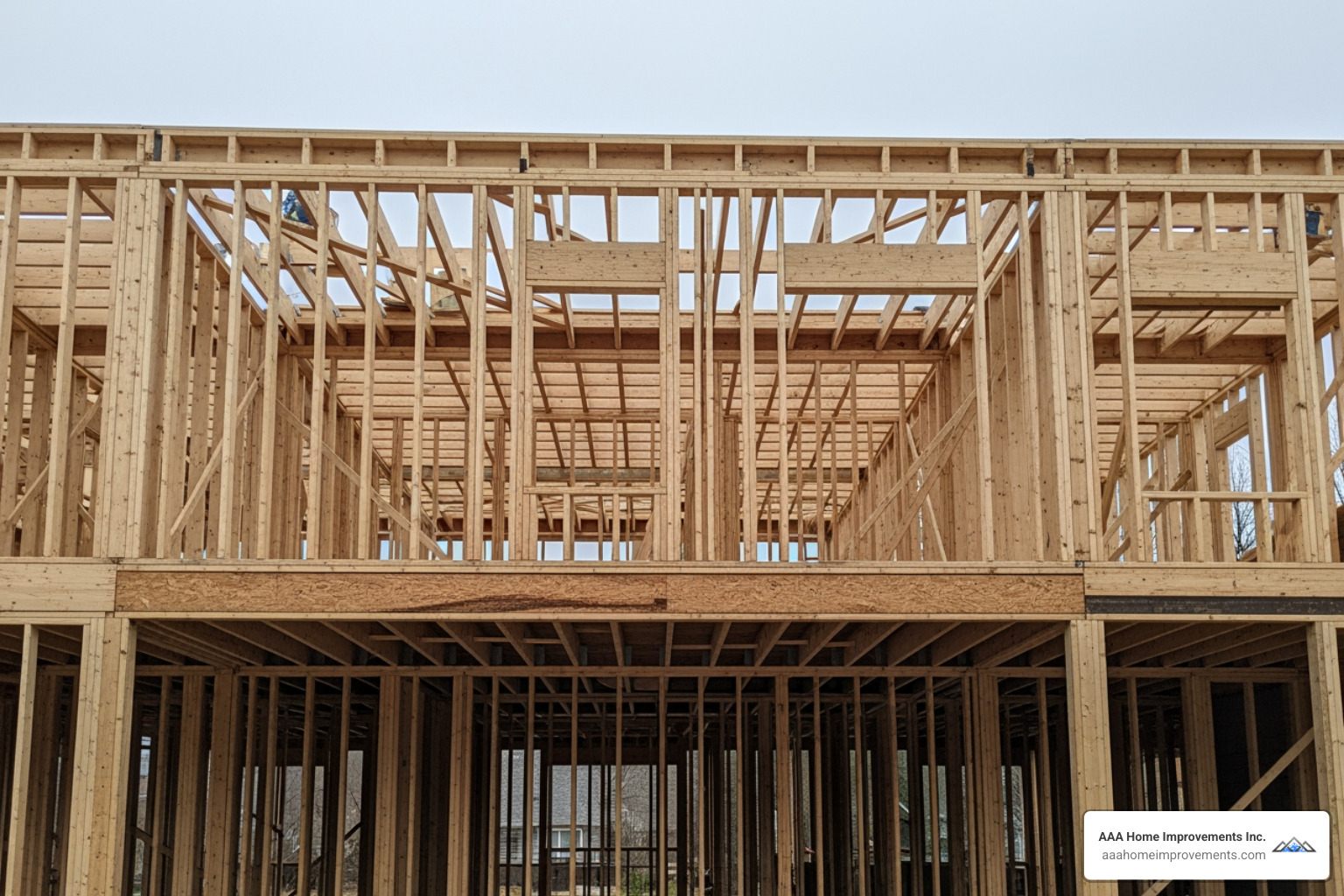
Foundation strength is the most critical factor. We assess for cracks or settling and identify load-bearing walls that may need reinforcement. We also analyze gravity loads and lateral loads (wind and seismic activity). Homes built before the 1940s often require seismic retrofitting. For more on structural assessments, see this Structural assessment guide.
The Role of the Structural Engineer
A structural engineer is essential for any 2nd story home addition. They handle:
- Soil Analysis: Assessing load-bearing capacity.
- Footing Reinforcement: Designing upgrades for added weight.
- Shear Walls: Specifying placement for lateral stability.
- Weight Distribution: Ensuring the structure from roof to foundation is safe.
At AAA Home Improvements, we integrate engineers into our design-build process to address these issues from the start.
Updating Essential Home Systems
Your home’s infrastructure must be extended to the new level. For more on major system changes, visit our page on More info about whole home remodeling.
- HVAC Zoning: We assess if your current system can handle the extra floor or if a new, larger system is required.
- Plumbing Stacks: New bathrooms require extending supply lines and waste stacks.
- Electrical Panel Upgrades: A new floor adds significant demand for lights and outlets, often requiring a panel upgrade.
| System Update | Typical Cost (General) |
|---|---|
| Additional HVAC Zones | $1,700–$2,800 |
| New HVAC System | ~$7,500 |
Cost Analysis and Financial ROI
The cost of 2nd story home additions in Denver typically ranges from $300 to $500 per square foot. This averages $150,000–$200,000 for a 1,000-sq.-ft. addition. Factors influencing the price include labor rates, material quality, and design complexity. For local financial details, see our Second story addition cost guide.
Factors Influencing the Total Investment
- Staircase Installation: Budget around $2,000 for a quality staircase, considering its impact on first-floor space.
- Roof Replacement: A full addition requires a new roof, which is a significant but necessary expense.
- Exterior Matching: Matching siding and windows ensures a cohesive look but can add costs if original materials are discontinued.
- Foundation Reinforcement: If needed, plan for approximately $5,000 in strengthening work.
- Temporary Housing: Most homeowners move out during construction, which should be factored into the budget.
2nd story home additions: Value vs. Cost
- Increased Value: A 65% to 83% ROI makes this one of the best home improvement investments.
- Marketability: More bedrooms and bathrooms attract buyers and lead to quicker sales.
- Long-Term Equity: As Denver property values rise, your investment builds significant equity.
- Financing: Options include HELOCs, home equity loans, or cash-out refinances. We recommend consulting a mortgage professional to find the best fit for your project.
Navigating Zoning and the Construction Timeline
Before construction, we must steer local zoning and development by-laws. These dictate height restrictions, setbacks, and lot coverage. HOA approvals may also be required. Our team handles these regulations across Denver, Lakewood, and surrounding areas. For more, see More info about Denver additions.
The Design-Build Phase
- Architectural Planning: We create drawings and 3D models to visualize the integration of the new space.
- Preconstruction: Detailed estimating identifies challenges and sets a clear budget.
- Permit Acquisition: We handle the submission process, which can take 1 to 6 months.
- Material Selection: We guide you through choosing finishes that fit your budget and style.
2nd story home additions: What to Expect During Construction
A full addition takes 6-12 months; partials take 3-6 months.
- Demolition: The existing roof is removed, and the first floor is modified.
- Framing: The new level is built out.
- Dried-In Stage: Roof, windows, and doors are installed to protect the interior.
- Rough-Ins: Plumbing, electrical, and HVAC lines are installed.
- Insulation and Drywall: The space is prepared for finishing.
- Interior Finishing: Flooring, cabinetry, and fixtures are installed.
- Utility Disruptions: Expect temporary shut-offs, which is why many homeowners move out during this phase.
Our design-build workflow ensures clarity and craftsmanship throughout this disruptive but exciting process.
Design Considerations for a Seamless Addition
A successful 2nd story home addition should look like it was always part of the original house. We focus on architectural blending, functional stair placement, and natural interior flow. For inspiration, see our More info about pop-top projects.
Matching the Exterior Aesthetic
- Siding and Masonry: We source matching materials or update the entire exterior for a unified look.
- Roof Pitch: Our architects design rooflines that maintain harmony and ensure proper drainage.
- Window Proportions: New windows are scaled to match the first floor to avoid a “tacked-on” appearance.
- Trim Details: Matching eaves and soffits helps blend the old and new sections.
Interior Layout and Functionality
- Master Suites: A popular choice featuring en-suite baths and walk-in closets.
- Home Offices: Provides a quiet, private workspace away from main living areas.
- Laundry Placement: Moving laundry to the second floor adds daily convenience.
- Sound Insulation: We use robust insulation to reduce noise transfer between floors.
- Floor Plan Integration: We optimize the layout to ensure a logical flow and maximize usable space without making the home feel cramped.
Frequently Asked Questions about Second Story Additions
Can my existing foundation support a second story?
A structural assessment by a licensed engineer is required. They evaluate the foundation, load-bearing walls, and soil conditions. If reinforcement is needed, it typically costs around $5,000. Homes built before the 1940s often require more extensive work to meet modern codes.
Do I need to move out during construction?
For a full addition, moving out is highly recommended. Construction involves utility shut-offs, significant noise, dust, and exposure to the elements. Safety is also a concern with the roof removed. Many homeowners rent a short-term apartment or stay with family during the 5-9 month construction window.
How long does the entire process take?
The total timeline is usually 9-18 months:
- Design: 3-5 months.
- Permits: 1-6 months.
- Construction: 5-9 months for full additions, 3-6 months for partials.
Weather and material availability can also impact these estimates. Patience is key for such a transformative project.
Conclusion
A 2nd story home addition is a major investment that allows you to gain space and value while staying in your preferred Denver neighborhood. At AAA Home Improvements, we bring over 20 years of experience to these complex projects.
Our design-build expertise ensures a transparent process for substantial remodels ranging from $50,000 to $3M+. We provide in-house architects and engineers to manage every detail from zoning to final construction. Whether you are in Lakewood, Arvada, or Highlands Ranch, we are dedicated to delivering clarity and craftsmanship.
Ready to expand your home upwards? Let’s make your home grow with your life.