"How much per square foot to remodel my house?" It is the single most common question we get from Denver homeowners. And honestly? It's the wrong question to ask.
Using a generic per-square-foot multiplier to estimate a whole home remodel cost in Denver is a guaranteed way to blow your budget. Why? Because remodeling a 1920s Wash Park bungalow with knob-and-tube wiring costs vastly more per square foot than updating a 1990s tract home in Highlands Ranch.
In this guide, we are pulling back the curtain on real construction costs in 2026. We’ll break down exactly what drives the price of a gut remodel, the hidden costs that catch homeowners off guard, and why investing $300k into your current home is often a better financial move than buying a new one.
TL;DR: In 2026, a true whole home remodel in Denver typically starts around $150,000 for cosmetic updates and can exceed $400,000+ for a full gut remodel involving structural changes, new HVAC, and luxury finishes. The biggest cost drivers are moving load-bearing walls, updating 100-year-old plumbing/electrical, and custom cabinetry.
Table of Contents
What is a Whole Home Remodel?
Before we talk numbers, we need to define the scope. A whole home remodel is not painting the walls, replacing the carpet, and swapping out cabinet hardware.
A true whole home remodel (often called a gut remodel) involves taking the house down to the studs in multiple rooms. It typically includes:
- Completely redesigning the kitchen layout (moving plumbing and gas lines).
- Gutting and expanding the primary bathroom and guest bathrooms.
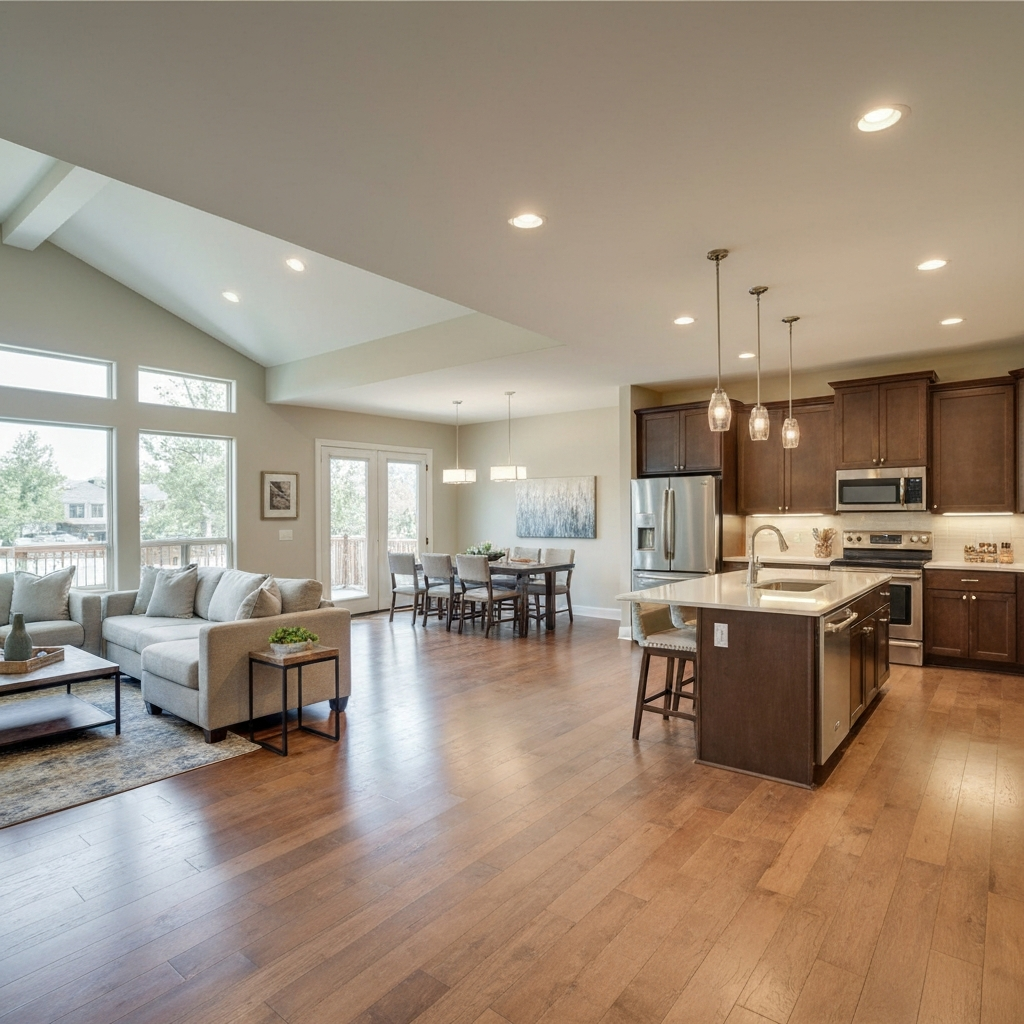
- Removing walls to create an open-concept living area.
- Upgrading major systems (electrical panels, HVAC, plumbing stacks).
- Replacing all flooring, trim, and interior doors.
You are essentially building a brand new house inside the shell of your existing one.
The 2026 Cost Breakdown
While every project is unique, here are the realistic starting ranges for whole home remodels in the Denver metro area based on current labor and material costs.
Tier 1: The "Pull and Replace" Remodel ($150,000 – $250,000)
This tier involves updating the entire home without making major structural changes. You are keeping the kitchen and bathrooms in their current footprints.
- New semi-custom kitchen cabinets, quartz counters, and appliances.
- Updating 2-3 bathrooms with new tile, vanities, and fixtures.
- New flooring throughout the main level.
- Fresh paint and updated lighting fixtures.
- No load-bearing walls removed; no major exterior changes.
Tier 2: The Structural Transformation ($250,000 – $400,000)
This is our most common project scope at AAA Home Improvements. You are fundamentally changing how the house flows.
- Removing load-bearing walls to open the kitchen to the living room (requires structural steel and engineering).
- Relocating the kitchen entirely or significantly expanding its footprint.
- Reconfiguring the floor plan to create a true primary suite with a walk-in closet.
- Significant electrical and plumbing upgrades to support the new layout.
- High-end finishes (custom cabinetry, hardwood floors, luxury appliances).
Tier 3: The Luxury Gut Remodel ($400,000+)
At this level, you are taking the house down to the exterior studs.
- Complete floor plan reconfiguration on multiple levels.
- All new windows and exterior doors (e.g., massive multi-slide patio doors).
- Completely new HVAC, plumbing, and electrical systems.
- Ultra-luxury finishes (Sub-Zero/Wolf appliances, custom inset cabinetry, imported stone).
- Often includes a small bump-out addition or basement finish.
The 3 Biggest Budget Drivers
If you want to control your budget, you need to understand what actually drives the cost of construction.
1. Moving Load-Bearing Walls
Everyone wants an open concept, but removing a wall that holds up your roof is expensive. It requires a structural engineer to design a beam (often steel), temporary shoring to hold the house up while the wall is removed, and significant labor to install the new beam. Expect to pay $10,000 to $20,000+ just to remove a major load-bearing wall.
2. Relocating Plumbing
Moving a sink three feet to the left is relatively cheap. Moving a toilet across the room, or relocating a kitchen to the other side of the house, is incredibly expensive. It requires trenching concrete (if on a slab or basement) and re-pitching drain lines.
3. Cabinetry
Cabinetry is usually the single largest line item in a remodel budget. The jump from stock, builder-grade cabinets to custom, ceiling-height, inset cabinetry can add $30,000 to $50,000 to your kitchen and bathroom costs.
Hidden Costs in Denver Homes
Denver has beautiful historic housing stock. But remodeling a home in Highlands, Park Hill, or Wash Park means dealing with 100-year-old problems. If your home was built before 1970, budget for these hidden costs:
| Hidden Issue | The Problem | Estimated Fix Cost |
|---|---|---|
| Knob & Tube Wiring | Fire hazard; won't pass modern code. Must be replaced. | $10,000 - $20,000+ |
| Galvanized Plumbing | Corroded pipes causing low water pressure and leaks. | $8,000 - $15,000 |
| Asbestos/Lead | Common in flooring, drywall mud, and paint. Requires abatement. | $3,000 - $10,000+ |
| Old HVAC | Undersized ducts or failing furnace unable to handle new layout. | $12,000 - $25,000 |
Moving vs. Remodeling: The ROI
When homeowners see a $300,000 estimate, their first reaction is often, "We should just move." But let's look at the math of moving in Denver right now.
If you own a $800,000 home and want to buy a $1.2M home that is already updated:
- Realtor Fees (Selling): ~$48,000
- Closing Costs (Buying): ~$15,000
- Moving Costs: ~$5,000
- Total Sunk Cost: ~$68,000
That is $68,000 that vanishes into thin air. It doesn't build equity. Furthermore, if you bought or refinanced between 2020 and 2022, you likely have a mortgage rate under 4%. Giving that up for a 7% rate will cost you hundreds of thousands of dollars in interest over the life of the loan.
Investing that $300,000 into your current home builds immediate equity, gives you a custom space tailored exactly to your taste (not someone else's flip), and allows you to keep your low interest rate and stay in the neighborhood you love.
How to Budget Without Surprises
The horror stories of remodels going 50% over budget almost always stem from the traditional "Design-Bid-Build" process, where an architect draws plans without knowing material costs, and a general contractor bids low just to win the job.
To avoid this, use a Design-Build firm.
At AAA Home Improvements, our estimators are in the room with our designers from day one. As we design your kitchen, we are costing the cabinets. If a structural beam threatens to blow the budget, we pivot the design immediately. You get a guaranteed, fixed-price contract before demolition ever begins.
FAQs About Denver Remodel Costs
How much should I set aside for contingencies?
Even with a fixed-price contract, you should have a personal contingency fund of 10% to 15% of the project total. This covers unforeseen issues (like discovering rotted framing behind a wall) or upgrades you decide to make mid-project (like choosing a more expensive slab of marble).
Is it cheaper to remodel or build new in Denver?
Generally, remodeling is less expensive than building a custom home from the ground up, as you are utilizing the existing foundation, framing, and utility connections. However, a massive Tier 3 gut remodel with extensive structural changes can approach the cost of new construction.
Do I need to move out during a whole home remodel?
Yes. For a true whole-home gut remodel, it is unsafe and impractical to live in the house during construction. There will be weeks without plumbing, electricity, or drywall. You will need to budget for temporary housing for 4 to 8 months depending on the scope.
Does a whole home remodel increase property taxes?
Yes, but usually not as much as buying a new home. In Colorado, the county assessor will re-evaluate your home's value based on the permits pulled. However, the increase is typically less shocking than resetting your tax basis entirely by purchasing a new, more expensive property.
Can I finance a whole home remodel?
Yes. Most homeowners finance large remodels using a Home Equity Line of Credit (HELOC), a Home Equity Loan, or a Cash-Out Refinance. If you have significant equity in your Denver home, a HELOC is often the most flexible tool.
Ready to Transform Your Home?
A whole home remodel is a massive investment, but it is the ultimate way to get your dream home without giving up your neighborhood or your mortgage rate.
- Don't trust "per square foot" estimates.
- Budget heavily for structural and systemic updates, not just cosmetics.
- Use a design-build firm to guarantee your price before construction begins.
If you are ready to get real numbers for your specific home, schedule a discovery call with AAA Home Improvements. We’ll discuss your vision, evaluate your home, and give you a realistic budget range based on today's actual construction costs.
